Nitroalkanes, nitrate esters, organic peroxides, chlorates and anything carrying nitrocellulose. The prohibition list we work to, and the checks a drum gets before it goes in.
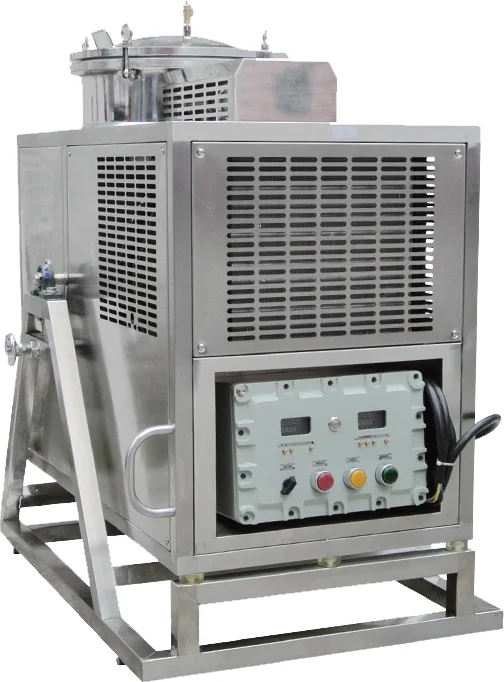
Every drum offered for recovery is checked against this list before it is opened. It is the same list our own operators work to, and it is the condition on which the machine is safe to run.
Explosives
- Nitroglycol (ethylene glycol dinitrate), nitroglycerin (glycerol trinitrate), nitrocellulose and other explosive nitrate esters.
- Trinitrobenzene, trinitrotoluene (TNT), trinitrophenol (picric acid) and other explosive nitro compounds.
- Peracetic acid, methyl ethyl ketone peroxide (MEKP), benzoyl peroxide and other organic peroxides.
- Nitroalkane solvents: nitromethane, nitroethane, nitropropane and other nitroalkanes, and mixed solvents containing them at any concentration. These are flammable liquids that can detonate when heated, confined or shocked; heating and distillation are prohibited.
- Waste paints, thinners, gun-wash liquids, paint sludge and dried residues containing nitrocellulose.
Pyrophoric, water-reactive and reducing agents
- Metals: lithium, potassium, sodium, yellow phosphorus (white phosphorus), phosphorus sulfides, red phosphorus.
- Celluloid-type and reactive agents: calcium carbide, calcium phosphide, magnesium powder, aluminium powder.
- Reducing agents: sodium bisulfite and sodium dithionite (sodium hydrosulfite). They release sulfur dioxide on contact with acid or on heating, and react violently with oxidizers.
Oxidizers and peroxides
- Chlorates: potassium, sodium and ammonium chlorate, and other chlorates.
- Perchlorates: potassium, sodium and ammonium perchlorate, and other perchlorates.
- Inorganic peroxides: potassium peroxide, sodium peroxide, barium peroxide and others.
- Nitrates: potassium nitrate, sodium nitrate and other nitrates.
- Hypochlorites: potassium hypochlorite and other hypochlorites.
Before a drum goes in
- Fallback clause: waste of unknown composition, without an SDS, or suspected of carrying nitro compounds, organic peroxides or strong oxidizers is not processed.
- Pre-check: read the SDS and the composition; confirm whether the source process touched nitrocellulose, peroxides or strong oxidizers; if any doubt remains, run a micro-scale test in a fume hood with proper protection.
- Residue: anything containing nitrocellulose stays wet, is sealed, and goes to a licensed hazardous-waste facility. Drying or stockpiling it is prohibited.
Who carries the risk
The drum is loaded by the user, and the responsibility for what is in it stays there. Any accident, property loss or legal liability that follows from using a prohibited material is the user's, not the manufacturer's.